

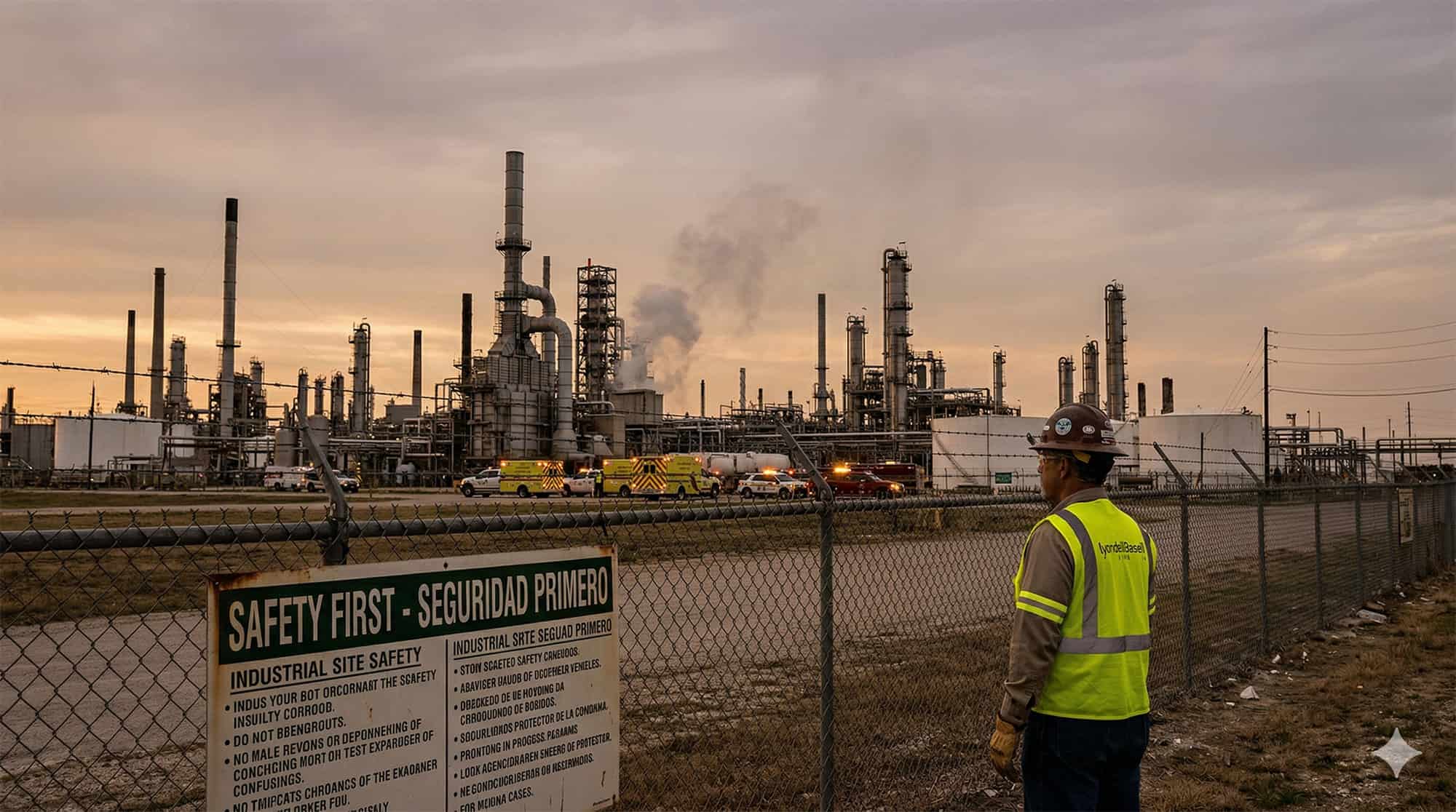
The skyline of Pasadena, Texas, is defined by the towering silhouettes of industry. For decades, the refineries and chemical plants that line the Ship Channel and Highway 225 have been the heartbeat of our local economy, providing thousands of families with stable, high-paying jobs. But on the morning of March 12, 2026, that skyline was obscured by a familiar and terrifying sight: a thick, black plume of smoke rising from the LyondellBasell Bayport Choate Plant.
The fire that erupted that day served as a jarring reminder of the inherent dangers lurking within the “Birthplace of Texas Industry.” While the immediate flames were eventually contained by the heroic efforts of industrial fire crews and local first responders, the aftermath has left many Pasadena families asking difficult questions about safety, corporate accountability, and the rights of the workers who risk their lives every day to keep these facilities running.
At Molina Law Firm, we believe that no worker should ever have to trade their health or safety for a paycheck. The LyondellBasell fire is not just a news headline; it is a catalyst for a broader conversation about refinery safety and the legal protections available to those injured in the line of duty.
The Industrial Landscape of Pasadena: A High-Stakes Environment
Pasadena is home to one of the highest concentrations of petrochemical facilities in the world. From ethylene and propylene production to complex refining processes, the chemicals handled in our local plants are essential to modern life. However, the same properties that make these substances useful also make them incredibly volatile.
Refinery work involves high-pressure systems, extreme temperatures, and a constant flow of flammable materials. In such an environment, the margin for error is razor-thin. When safety protocols are followed to the letter, these facilities can operate for years without incident. But when a corporation prioritizes production speed over maintenance, or when equipment is allowed to age past its safe operating life, the results are often catastrophic.
The March 12th fire at the Bayport Choate Plant was a stark example of how quickly a routine shift can turn into a life-altering disaster. For the workers on the ground, a refinery fire is not just a property loss for a multi-billion dollar corporation—it is a physical and psychological trauma that can leave permanent scars.
Lessons Learned from the March 12th Incident
While the official investigation into the LyondellBasell fire is still underway, early reports and historical data from similar incidents suggest several recurring themes in industrial accidents. By analyzing these “lessons,” we can better understand how to prevent future tragedies and identify where negligence may have occurred.
One of the primary lessons is the critical importance of preventative maintenance. In the high-pressure world of petrochemicals, equipment like valves, seals, and piping are subject to immense stress. Over time, corrosion and wear are inevitable. If a company fails to implement a rigorous inspection schedule or ignores early warning signs of equipment failure to avoid a costly shutdown, they are essentially gambling with the lives of their employees.
Another lesson involves the role of contract workers. Many refineries rely heavily on third-party contractors for specialized maintenance and turnaround projects. While these workers are often highly skilled, the fragmented nature of the workforce can lead to communication breakdowns. If a contractor is not properly briefed on a facility’s specific safety hazards, or if the refinery owner fails to oversee the contractor’s work effectively, a dangerous “safety gap” is created.
Finally, the LyondellBasell fire underscores the need for robust emergency response and evacuation plans. When a fire breaks out, every second counts. Workers must know exactly where to go, and emergency shut-off systems must function perfectly. Any delay in these systems can turn a localized fire into a plant-wide explosion.
Understanding Texas "Non-Subscriber" Laws
One of the most complex and misunderstood aspects of refinery injury cases in Texas is the concept of “Non-Subscriber” status. Unlike almost every other state in the Union, Texas does not require private employers to carry traditional Workers’ Compensation insurance. Employers who choose to opt out of the state-regulated system are known as “Non-Subscribers.”
For an injured worker, whether their employer is a subscriber or a non-subscriber makes a massive difference in how their legal case proceeds.
- If an employer has Workers’ Comp: The worker is generally barred from suing their employer for negligence. In exchange, they receive “no-fault” benefits that cover medical bills and a portion of lost wages. However, these benefits are often inadequate for catastrophic injuries and do not account for pain and suffering.
- If an employer is a Non-Subscriber: The legal “shield” is removed. The injured worker has the right to file a personal injury lawsuit directly against their employer. In these cases, the worker must prove that the employer’s negligence—such as faulty equipment, lack of training, or unsafe working conditions—caused the injury.
Many large industrial players in the Pasadena area choose to be non-subscribers, often creating their own “internal” disability plans. These plans are frequently designed to favor the company and limit the amount of money paid to the injured worker. If you were injured in the LyondellBasell fire or any other Pasadena industrial incident, the first thing Molina Law Firm will investigate is the insurance status of your employer. If they are a non-subscriber, you may be entitled to significantly more compensation than what their internal plan offers.
Common Causes of Refinery Negligence
When we represent a worker injured in a refinery fire, our investigation focuses on identifying the specific acts of negligence that led to the event. In the context of a fire like the one at LyondellBasell, we look for evidence of the following:
- Failure to Replace Aging Infrastructure: Refineries built decades ago require constant upgrades. Using “patchwork” repairs on equipment that should be replaced is a common form of corporate negligence.
- Inadequate Training: Every worker on a refinery site, from the most senior engineer to the newest contractor, must be trained on the specific chemicals and hazards of that unit. If a fire starts because a worker wasn’t taught how to handle a specific valve or emergency procedure, the company is liable.
- Incentivizing Speed Over Safety: In many plants, managers are under intense pressure to meet production quotas. This can lead to a culture where safety “shortcuts” are encouraged or ignored to keep the product flowing.
- Negligent Hiring and Supervision: If a refinery hires a sub-contractor with a poor safety record or fails to provide adequate supervision during a dangerous procedure, they can be held responsible for the resulting accidents.
The Physical and Financial Toll of Industrial Injuries
The injuries sustained in a refinery fire are often among the most severe we see in personal injury law. Beyond the immediate threat of the fire itself, workers are often exposed to:
- Severe Burns: Thermal burns from fire and chemical burns from caustic substances can require years of surgeries, skin grafts, and intensive physical therapy.
- Respiratory Damage: Inhaling toxic smoke or chemical vapors can lead to permanent lung damage, chronic obstructive pulmonary disease (COPD), or reactive airways dysfunction syndrome (RADS).
- Traumatic Brain Injuries (TBI): Explosions can create powerful shockwaves that cause brain damage even without a direct impact to the head. Falling debris is also a major risk during a fire.
- Orthopedic Injuries: Workers escaping a fire may suffer from broken bones, spinal cord injuries, or joint damage due to falls or being struck by heavy equipment.
The financial toll of these injuries is equally devastating. A worker who has spent their entire life in the plants may suddenly find themselves unable to return to the only career they’ve ever known. When you factor in the loss of future earning capacity, the cost of lifelong medical care, and the psychological impact of the trauma, the “settlement” offered by a company’s insurance adjuster is rarely enough to cover the true cost of the injury.
The Community Impact: Environmental Safety in Pasadena
The lessons of the LyondellBasell fire extend beyond the plant gates. Pasadena is a “fence-line” community, meaning thousands of homes, schools, and small businesses are located just a stone’s throw away from these massive industrial sites. When a fire occurs, the community is subjected to “shelter-in-place” orders and the fear of what might be in the air they are breathing.
At Molina Law Firm, we believe that refineries have a duty of care not just to their workers, but to the residents of Pasadena and the surrounding areas. Negligence that leads to a fire also leads to environmental contamination. Whether it is soot settling on homes or chemicals leaching into the groundwater during the firefighting efforts, the community deserves transparency and protection.
Our firm is committed to holding industrial giants accountable for the “external” costs of their negligence. If a refinery fire causes property damage or health issues for the surrounding neighbors, those residents have legal standing to seek compensation.
Why You Need a Local Pasadena Advocate
Taking on a multi-billion dollar corporation like LyondellBasell is a daunting task. These companies have unlimited resources, teams of high-priced defense attorneys, and decades of experience in minimizing their liability. They will often send their own investigators to the hospital to speak with injured workers before they’ve even had a chance to talk to their families, hoping to secure a statement that shifts the blame.
Molina Law Firm provides the counter-balance to that corporate power. We are not just lawyers; we are members of this community. We know these roads, we know these plants, and we know the hard-working people who make Pasadena what it is.
When we take on a refinery injury case, we immediately move to:
- Preserve Evidence: We issue “black box” and “spoliation” letters to ensure the company doesn’t “lose” maintenance logs, sensor data, or internal emails related to the fire.
- Hire Industry Experts: We work with chemical engineers and industrial safety experts who can peer-review the plant’s procedures and pinpoint exactly where the safety breakdown occurred.
- Handle the Insurance Companies: We manage all communication with the adjusters, ensuring that our clients are never pressured into signing away their rights.
- Tell the Human Story: We make sure the jury understands that our client is not just a “claim number,” but a father, a mother, and a neighbor whose life has been changed forever by someone else’s mistake.
Standing Strong with Pasadena Workers
The fire on March 12, 2026, was a tragedy, but it does not have to be a forgotten one. By holding negligent companies accountable, we can drive the industry toward higher safety standards. Every time a worker stands up for their rights, it makes the plants a little bit safer for the person working the next shift.
If you or a loved one were injured in the LyondellBasell fire, or if you have questions about your rights after an industrial accident in the Pasadena area, Molina Law Firm is here to help. We offer free, confidential consultations to help you understand your options and plot a course toward recovery.
In Texas, the statute of limitations for personal injury cases is typically two years, but in refinery cases, the most important evidence can disappear in a matter of days. Do not wait for the company to “do the right thing.” Take control of your future and ensure your family is protected.
