

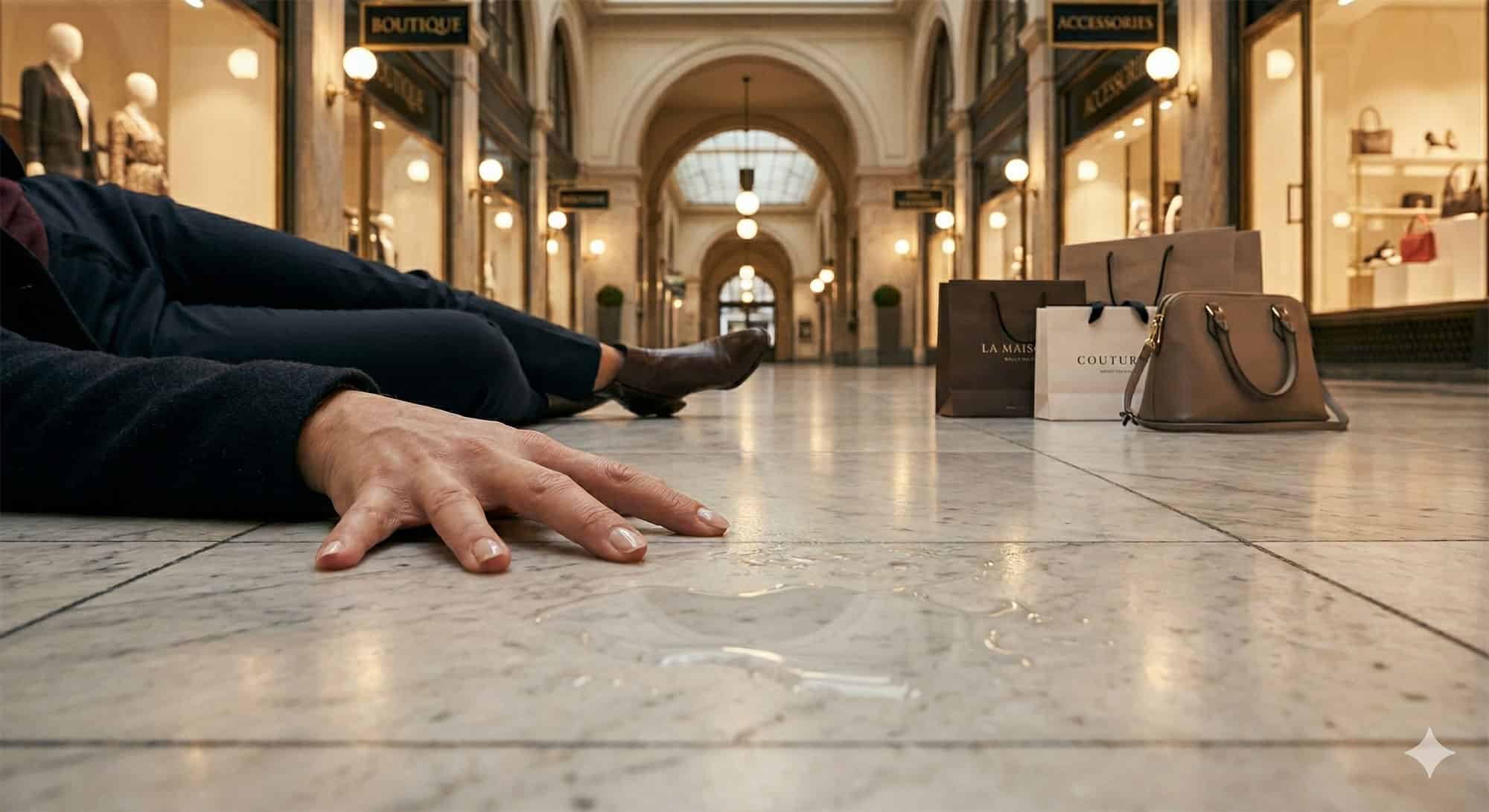
In a city as bustling and fast-paced as Houston, we are constantly on the move. Whether you are navigating the aisles of a H-E-B, walking through a rain-slicked parking lot near the Medical Center, or visiting a neighbor in a sprawling apartment complex off I-45, you expect the ground beneath your feet to be safe. Unfortunately, thousands of Houstonians discover every year that safety is often an afterthought for property owners.
A slip and fall accident can happen in the blink of an eye, but its consequences can last a lifetime. What begins as a momentary loss of balance can quickly escalate into broken bones, traumatic brain injuries, or chronic back pain. At the Molina Law Firm, we have spent over 20 years seeing the devastating impact these preventable accidents have on families.
Many people feel embarrassed after a fall, often blaming themselves for “not watching where they were going.” However, under Texas law, the responsibility for a safe environment rests squarely on the shoulders of the property owner or manager. If you’ve been hurt, you aren’t just a “clumsy” victim; you are an individual whose rights may have been violated by corporate or individual negligence.
What is Premises Liability in Texas?
To understand how a personal injury attorney can help you, it is first necessary to understand the legal framework known as Premises Liability. In Texas, this area of law dictates that property owners and occupiers (such as store tenants) have a legal duty to maintain their premises in a reasonably safe condition for those who enter.
However, a fall alone does not automatically make an owner liable. Texas law is notoriously complex and often leans in favor of the property owner unless you have an experienced advocate like Rick Molina to navigate the nuances. Liability is built upon the premise that an owner failed to fix a hazard they knew about—or should have known about—and that this failure directly caused your injury.
The degree of care an owner owes you depends largely on your “status” as a visitor at the time of the accident. Texas divides visitors into three primary categories:
- Invitees: These are individuals who enter the property for the mutual benefit of themselves and the owner, such as customers in a retail store or restaurant. Invitees are owed the highest duty of care. Owners must regularly inspect the property, repair known hazards, and warn of any dangerous conditions.
- Licensees: These are social guests or individuals entering for their own purposes, such as a friend visiting your home. The owner must warn a licensee of any non-obvious dangers they actually know about but is not necessarily required to inspect the property for unknown hazards.
- Trespassers: Generally, owners owe no duty to trespassers other than to refrain from causing intentional injury or acting with gross negligence.
The Hurdle of "Notice": Actual vs. Constructive Knowledge
The single most challenging aspect of a Texas slip and fall case is proving that the property owner had “notice” of the hazard. This is where many DIY claims fail and where the Molina Law Firm provides its greatest value. To win, we must prove one of the following:
- Actual Knowledge: The owner or an employee knew the hazard existed (e.g., a janitor saw the spill but walked away to find a mop without putting up a yellow sign).
- Constructive Knowledge: The hazard existed for such a length of time that the owner should have discovered it through reasonable inspection. This is often referred to as the “Time-Notice Rule.”
Proving constructive knowledge requires a deep dive into evidence. Did the grocery store have a “sweep log”? When was the last time an employee walked down that specific aisle? Is there surveillance footage showing how long the liquid was on the floor? Without an attorney to subpoena these records and interview witnesses, that evidence can—and often does—mysteriously disappear.
Common Hazards Leading to Houston Slip and Falls
Houston’s unique climate and infrastructure contribute to specific hazards that we frequently litigate. While every case is unique, the following conditions are often the primary culprits in premises liability claims:
Environmental and Weather-Related Hazards
Houston is famous for its sudden, heavy downpours. When rain is tracked into the entryways of office buildings or shopping centers, the floors become treacherous. Property owners have a responsibility to provide floor mats and frequent mopping during inclement weather.
Retail and Grocery Store Negligence
Leaking refrigeration units, fallen produce, and spilled liquids are common in grocery stores. In many cases, these spills occur in high-traffic areas where employees are constantly present. If an employee is working ten feet away from a spill and fails to address it, that is a clear breach of their duty to you.
Poor Lighting and Structural Defects
Many falls occur not because of a spill, but because of the environment itself. Poor lighting in a parking garage can hide a pothole or a curb. In apartment complexes, rotting wood on a staircase or a loose handrail can turn a routine walk into a catastrophe. These are known as “static defects,” and they often indicate a long-term pattern of neglected maintenance.
The "Open and Obvious" Defense: A Texas Trap
One of the most frequent tactics insurance companies use to deny claims is the “Open and Obvious” defense. They will argue that the hazard—whether it was a giant puddle or a broken step—was so apparent that any reasonable person would have seen and avoided it. Under Texas law, if a condition is deemed “open and obvious,” the owner may have no duty to warn you about it.
This is a legal trap designed to shift 100% of the blame onto the victim. However, at the Molina Law Firm, we know how to counter this. We look for factors that distracted you or made the hazard less visible than the insurance company claims. Was the lighting poor? Were there bright, distracting advertisements designed to pull your eyes away from the floor? Was the hazard the same color as the flooring? By reconstructing the scene, we can demonstrate that the owner’s negligence was the primary cause of the fall.
Comparative Negligence and the 51% Rule
Texas follows a “modified comparative negligence” rule, also known as proportionate responsibility. This means that a jury can assign a percentage of fault to both the plaintiff and the defendant.
For example, if a jury determines your total damages are $100,000, but they find you were 20% at fault for being distracted by your phone, your award would be reduced to $80,000. However—and this is the critical part—if you are found to be 51% or more at fault, you receive zero compensation.
Insurance adjusters are trained to bait you into admitting fault during recorded statements. They want you to say, “I guess I should have been looking down,” so they can use that 51% rule against you. This is why you should never speak to an insurance company without Attorney Rick Molina by your side. We handle the communication so you don’t inadvertently jeopardize your right to recovery.
How the Molina Law Firm Can Help
Navigating a slip and fall claim alone is like trying to find your way through a Houston hurricane without a map. The legal hurdles are high, and the opposition is well-funded. Here is how our firm levels the playing field for you:
1. Comprehensive Investigation
Evidence in slip and fall cases is incredibly fragile. Spills are mopped up, surveillance tapes are looped over, and witnesses move away. We move quickly to send “spoliation letters” to property owners, legally requiring them to preserve all evidence related to your fall. We gather maintenance records, safety manuals, and employee training logs to build a “paper trail” of negligence.
2. Calculating the True Cost of Your Injury
A slip and fall isn’t just about a doctor’s visit; it’s about the “ripples” the injury creates in your life. We work with medical experts, economists, and vocational specialists to determine the full extent of your damages, including:
- Past and future medical expenses (surgeries, physical therapy, medication).
- Lost wages and loss of future earning capacity.
- Physical pain and suffering.
- Mental anguish and loss of enjoyment of life.
- Permanent physical impairment or disfigurement.
3. Proving “The Human Factor”
Statistics show that individuals represented by an experienced personal injury attorney often recover significantly more—sometimes up to 40% more—than those who represent themselves. Why? Because we know how to tell your story. We don’t just present medical bills; we show how your inability to pick up your children or return to your job has impacted your dignity and well-being.
4. Taking the Case to Trial
Many law firms are “settlement mills” that take the first lowball offer the insurance company throws their way. Rick Molina is a seasoned trial lawyer. If the insurance company refuses to offer a settlement that reflects the true value of your loss, we are fully prepared to present your case to a Houston jury. Our reputation for being willing to go to trial often forces insurance companies to be more reasonable at the negotiating table.
Immediate Steps to Take After a Fall
If you have just suffered a fall, the steps you take in the next hour can determine the success of your future claim. While we understand you may be in pain and shock, try to do the following:
Report the Incident
Notify the manager or owner immediately. Ensure that an official incident report is filed. Do not leave without a copy or at least a photo of the report. If the manager refuses to give you a copy, make a note of their name and the time of the request.
Photograph the Hazard
Use your phone to take clear photos and videos. Capture the liquid, the uneven pavement, or the lack of lighting. Take “wide” shots to show the context of the area and “close-ups” of the specific hazard. If there are no warning signs, take a photo of the entire area to prove their absence.
Identify Witnesses
If anyone saw you fall or saw the hazard before you fell, get their names and phone numbers. Independent witness testimony is often the “smoking gun” in a premises liability case.
Seek Medical Care
Even if you think you are “just a little sore,” go to a doctor. Adrenaline can mask serious injuries like internal bleeding or concussions. A delay in medical treatment is the #1 reason insurance companies deny claims, as they will argue that your injuries weren’t actually caused by the fall.
Call Rick Molina at (713) J-U-S-T-I-C-E
Before you call your boss, your insurance company, or post about it on social media, call us. We provide a free, no-obligation consultation to evaluate your case.
The Statute of Limitations in Texas
Time is not on your side. In Texas, the statute of limitations for personal injury claims is generally two years from the date of the accident. While two years may seem like a long time, the investigation process for a slip and fall is extensive. Waiting until the last minute makes it nearly impossible to find witnesses or secure surveillance footage. The sooner you retain the Molina Law Firm, the stronger your case will be.
Conclusion: You Don't Have to Walk This Path Alone
A slip and fall accident can leave you feeling vulnerable, frustrated, and overwhelmed by mounting bills. The property owner has a team of lawyers and adjusters working to protect their bottom line. You deserve a team that is dedicated to protecting yours.
At the Molina Law Firm, we operate on a contingency fee basis. This means you never pay us a dime out of your own pocket. We only get paid if we successfully recover compensation for you. This allows you to focus on what matters most: your physical and emotional recovery.
Attorney Rick Molina has spent over two decades fighting for the rights of the injured in Houston. We understand the local courts, the local laws, and the local challenges you face. Whether you were injured in a big-box store, a local restaurant, or a government building, we have the resources and the grit to hold the responsible parties accountable.
Justice delayed is justice denied. Don’t let a negligent property owner walk away from the damage they’ve caused. Contact the Molina Law Firm today at (713) 587-8423 or (713) J-U-S-T-I-C-E for your free consultation. Let us help you get back on your feet—literally and legally.
